
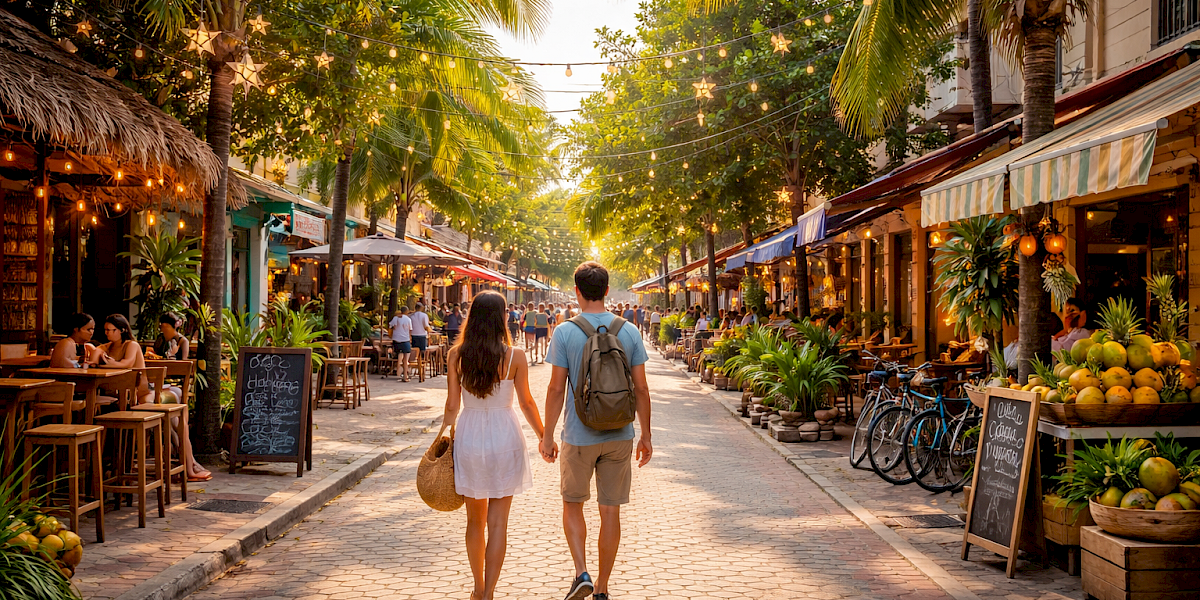
Walk-to-Everything in Playa del Carmen: Why Walkability Converts Better for Rentals and Resale
In Playa del Carmen, walkability is not a “nice-to-have”. It’s a demand driver that shows up in three places that matter: guest decision-making, operational simplicity, and long-term resale liquidity. When a visitor (or remote worker) can comfortably move between the beach, 5th Avenue, groceries, cafés, gyms, and nightlife without a car, your property becomes easier to rent, easier to price, and easier to sell.
Why walkability outperforms “close to the beach”
“Close to the beach” can mean very different things in practice. Walkability is more measurable and more valuable:
Lower friction for guests: fewer taxis, fewer logistics, fewer “where do we park?” moments.
Higher booking intent: listings that clearly communicate a walkable lifestyle convert faster.
Better reviews: a guest’s trip feels smoother when everything is accessible on foot.
Stronger resilience: walkable micro-locations hold demand across traveler profiles (short stays, digital nomads, couples, small families).
What guests actually want when they say “central”
Most guests aren’t asking for downtown energy 24/7. They’re asking for:
a safe and comfortable walk back at night,
quick access to food and essentials (not just bars),
a beach route that feels easy (shade, sidewalks, simple directions),
and a building that supports the lifestyle (elevator, security, rooftop/pool, reliable internet).
Micro-areas in Playa that typically read as “walk-to-everything”
Instead of selling the city, sell the micro-location. Depending on the building and exact street, these areas often perform strongly for walkability-based demand:
Centro / near 5th Avenue: maximum convenience; manage noise expectations honestly.
Gonzalo Guerrero: central, beach access, and often a smoother “balanced” feel.
Zazil-Ha: strong lifestyle positioning; a fit for vacation + mid-stay renters.
Hollywood / pockets near Centro: quiet-but-close pockets that surprise buyers.
Ejidal (selected blocks): value options with quick access to Centro when the route is straightforward.
(Performance depends heavily on the exact block, building management, and the guest experience you can deliver.)
How to evaluate walkability like an investor (not a tourist)
Use this checklist when screening a listing:
Routes, not distance: is the walk pleasant and simple, or awkward and exposed?
Noise profile: nightlife adjacency can help or hurt—match it to your target guest.
Daily essentials: supermarkets, pharmacies, cafés, laundries—are they truly close?
Building fundamentals: security, maintenance discipline, common areas, elevator.
Operational ease: deliveries, check-in flow, access control, parking expectations.
Connectivity: reliable internet is non-negotiable for mid-stay demand.
Red flags that break the “walkable” promise
Routes that look short but feel unsafe or uncomfortable at night.
“5 minutes to the beach” that ignores crossings, construction zones, or missing sidewalks.
Buildings with inconsistent management, unclear rules, or chronic maintenance issues.
Units that are central but lack essentials to operate smoothly (AC condition, water pressure, internet, storage).
What we’ll select for Week 3’s featured listings
To align with this theme, the strongest candidates are typically:
Studios and 1BRs in high-walkability micro-locations with clear amenities.
2BRs in quieter central pockets that appeal to small families and longer stays.
Buildings that can support both vacation rentals and medium stays (good internet, security, common areas, clean HOA rules).
The bottom line
In Playa del Carmen, walkability is a practical edge. It reduces friction for guests, improves conversion, and strengthens resale liquidity. For this week’s newsletter, we’ll prioritize properties that can credibly deliver a “walk-to-everything” lifestyle—because that’s what renters and buyers repeatedly pay for.

Aarón is a born and raised "chilango". After finishing his university studies, what started as a social service trip became his new home and where he started a family in Playa del Carmen. He enjoys the delicious food and culture of the Yucatan peninsula with his wife, daughter, and son. As a professional, he has made a career as a specialist in social networks and electronic media, helping the companies he has worked for to efficiently achieve all their objectives in the medium.